Kuniysohi – Stories of a hundred heroes of high renown
Meikô hyaku yû den, 名高百勇伝
This series is among the most conceptually ambitious warrior-print (musha-e) series by Utagawa Kuniyoshi, produced in Edo around 1843–1844 and published by Izumiya Ichibei. Conceived as a visual compendium of exemplary figures from Japanese history and legend, the series ultimately survives in thirty-six known designs.
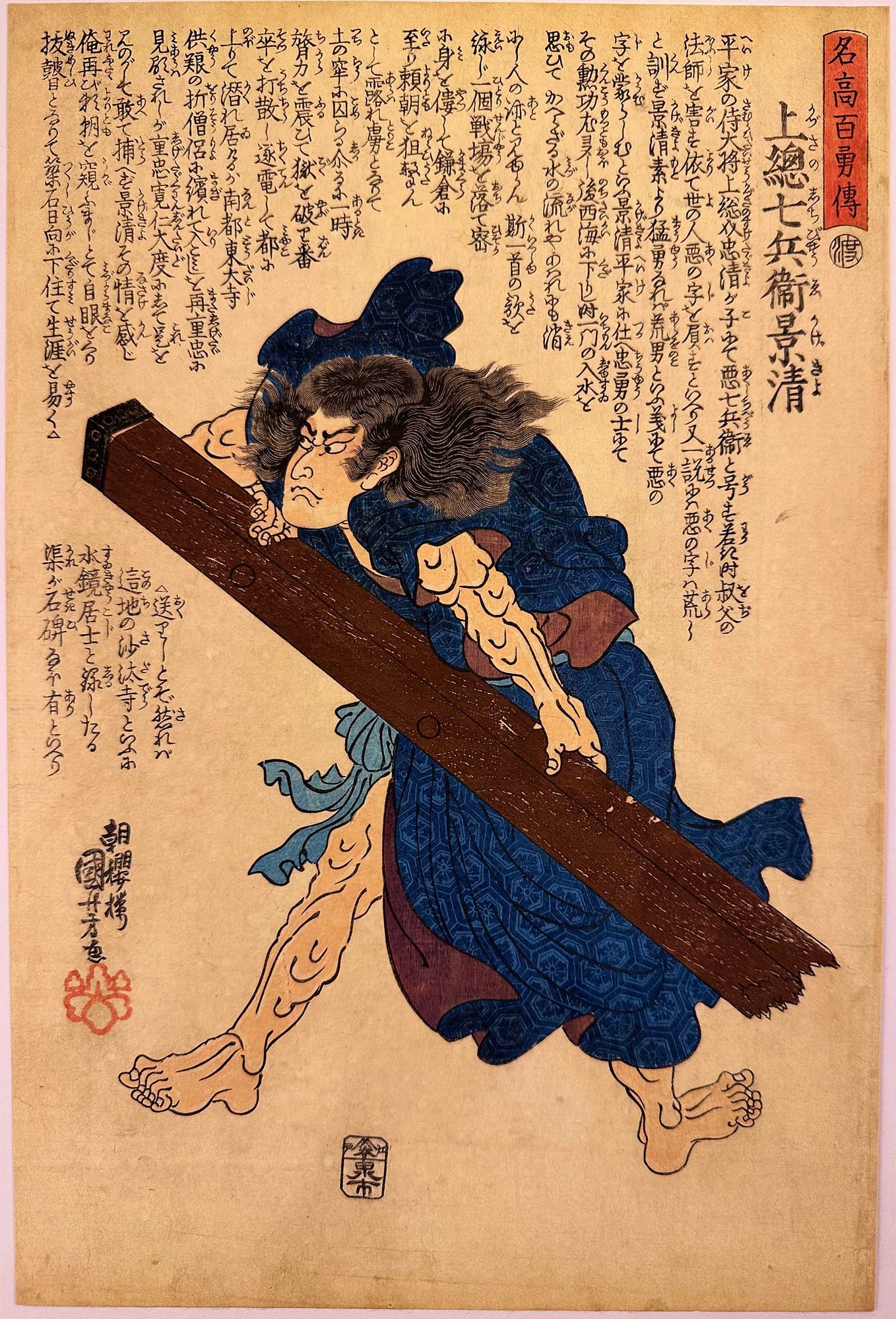
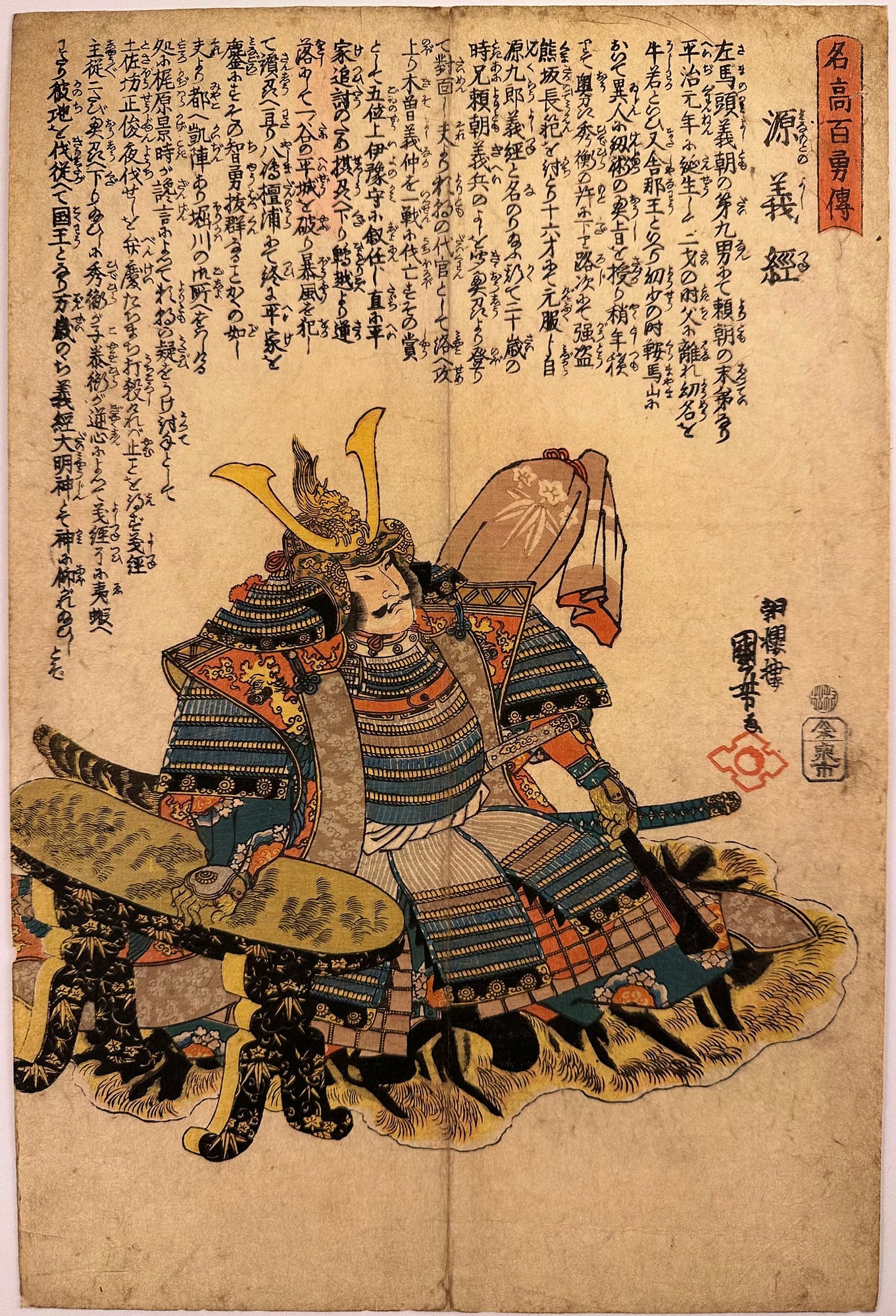
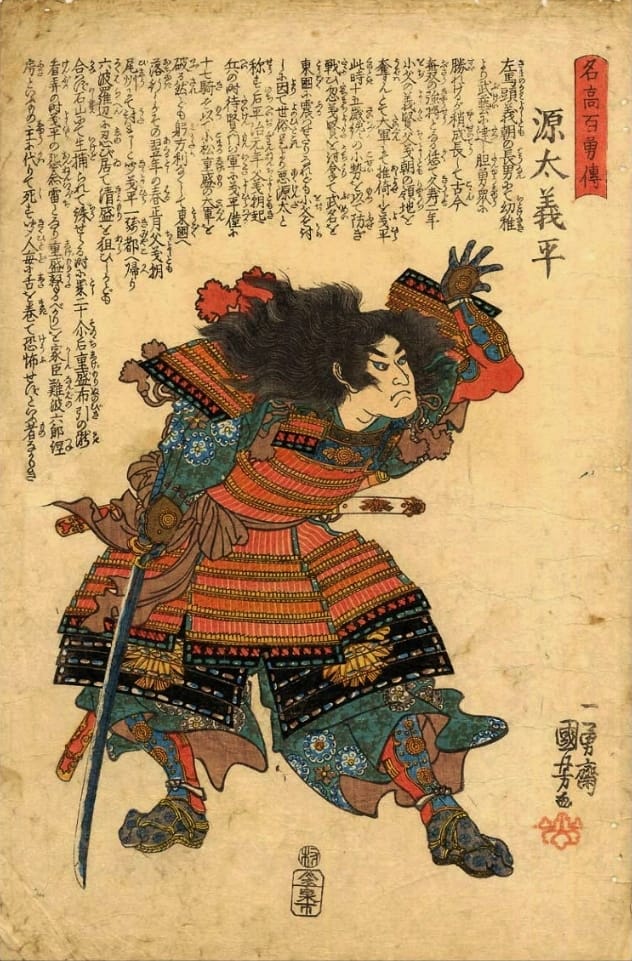
This was the first series in which Kuniyoshi displayed what would become his favourite format for historical portrait-biographies: a single, dominant figure in a vertical ōban format, set against a restrained or minimal ground with biographical text above. The title cartouche is at top right, next to this in larger kanji is the featured hero’s name. Somewhere on the print we will find Kuniyoshi’s signature and kiri seal, the publishers mark, and a single censor seal (various: Muramatsu, Watari, Mura, Fu).
Drawing on the East Asian tradition of didactic “hundred heroes” anthologies, Kuniyoshi constructs a trans-historical canon of martial virtue. The selection ranges from mytho-historical figures such as Empress Jingū to warriors of the Genpei War and later exemplars including Kusunoki Masashige and Takeda Shingen, forming a deliberately panoramic vision of heroism.
Formally, the series departs from Kuniyoshi’s more theatrical compositions – or is still exploring them. Rather than moments of combat, Kuniyoshi favours scenes of introspection or preparation—figures writing, reflecting, or quietly poised—thereby emphasising character over action. The warrior-monk Musashibō Benkei, for example, appears engaged in writing, underscoring intellect and composure as essential heroic qualities.
Identification is achieved through a synthesis of visual attributes—armour, weapons, personal effects—and accompanying textual cartouches that provide names and succinct narrative context. This interplay presumes an informed viewer and aligns the series with a literate, historically aware audience.
Produced during the Tenpō reform era, the series reflects a climate that favoured moral exemplarity over ostentation. Its emphasis on loyalty, restraint, and ethical conduct resonates with Neo-Confucian ideals, while maintaining Kuniyoshi’s distinctive sensitivity to individual presence and psychological depth.
Meikō Hyaku Yūden represents a pivotal shift from narrative spectacle to character-centred representation. In presenting heroes not at the height of action but in moments of composure, Kuniyoshi articulates a more reflective vision of the warrior ideal—one grounded as much in inner discipline as in martial achievement.
The bushidoboutique collection of Meikô hyaku yû den prints